
Microcurrent Neurofeedback to Aid The Autistic Brain
A Gentler Way to Support the Autistic Brain
Your child struggles with eye contact, doesn’t understand social cues, and has frequent meltdowns that you can’t seem to understand. After months of testing and talk therapy, you finally get a diagnosis: your child is on the autism spectrum.
Autism isn’t a bad thing, but it can make living in a world designed for neurotypical people much harder to navigate.
This can be frustrating for your child and for you, which can lead to increased meltdowns and, over time, isolation and depression.
Microcurrent neurofeedback (MCN) is a non-invasive, drug-free approach that aims to support the brain’s natural self-regulation rather than directly enforcing behavioral change.
Why Regulation Is the Core Challenge in Autism

Maintaining a regulated nervous system can be challenging for anyone, but especially for individuals on the autism spectrum. Sleep disruption, difficulty calming, sensory overload, attention challenges, and transition difficulties are common struggles for both children and adults with ASD.
Nervous system regulation is often considered a foundational piece for learning, behavior, and emotional connection.
Brainwave Patterns and Autism
Brainwave activity plays a role in attention, emotional regulation, and sensory processing. Research using EEG has identified associations between autism and differences in brainwave patterns, including elevated theta activity and altered connectivity in social and emotional brain networks.
These findings have led researchers to explore neurofeedback approaches as a possible support for regulation in individuals with ASD. Microcurrent neurofeedback is one such emerging modality currently under investigation.
How Microcurrent Neurotherapy Works
During MCN sessions, trained providers place sensors on the scalp to measure brainwave activity. This assessment is used to identify patterns associated with dysregulation.
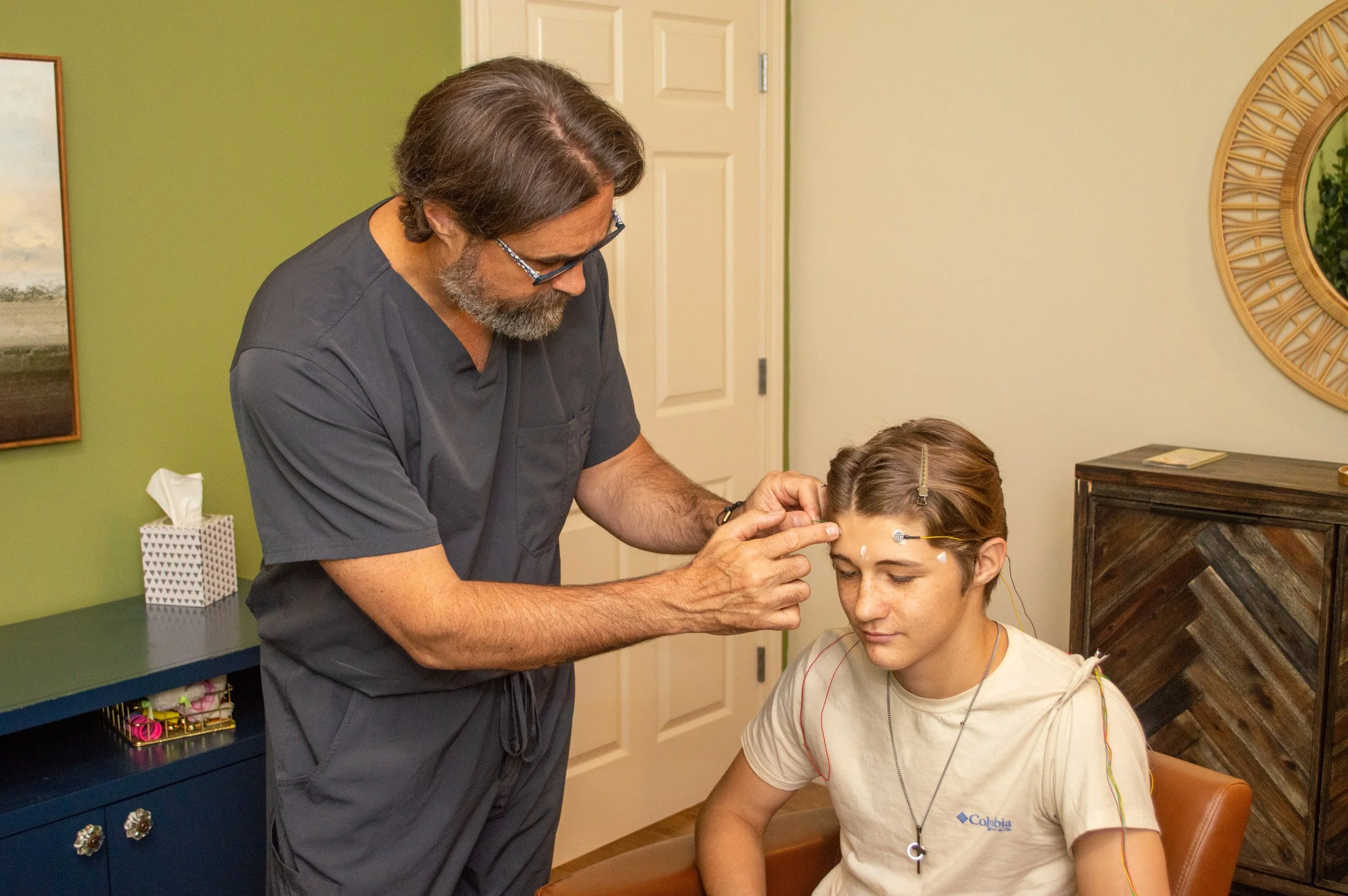
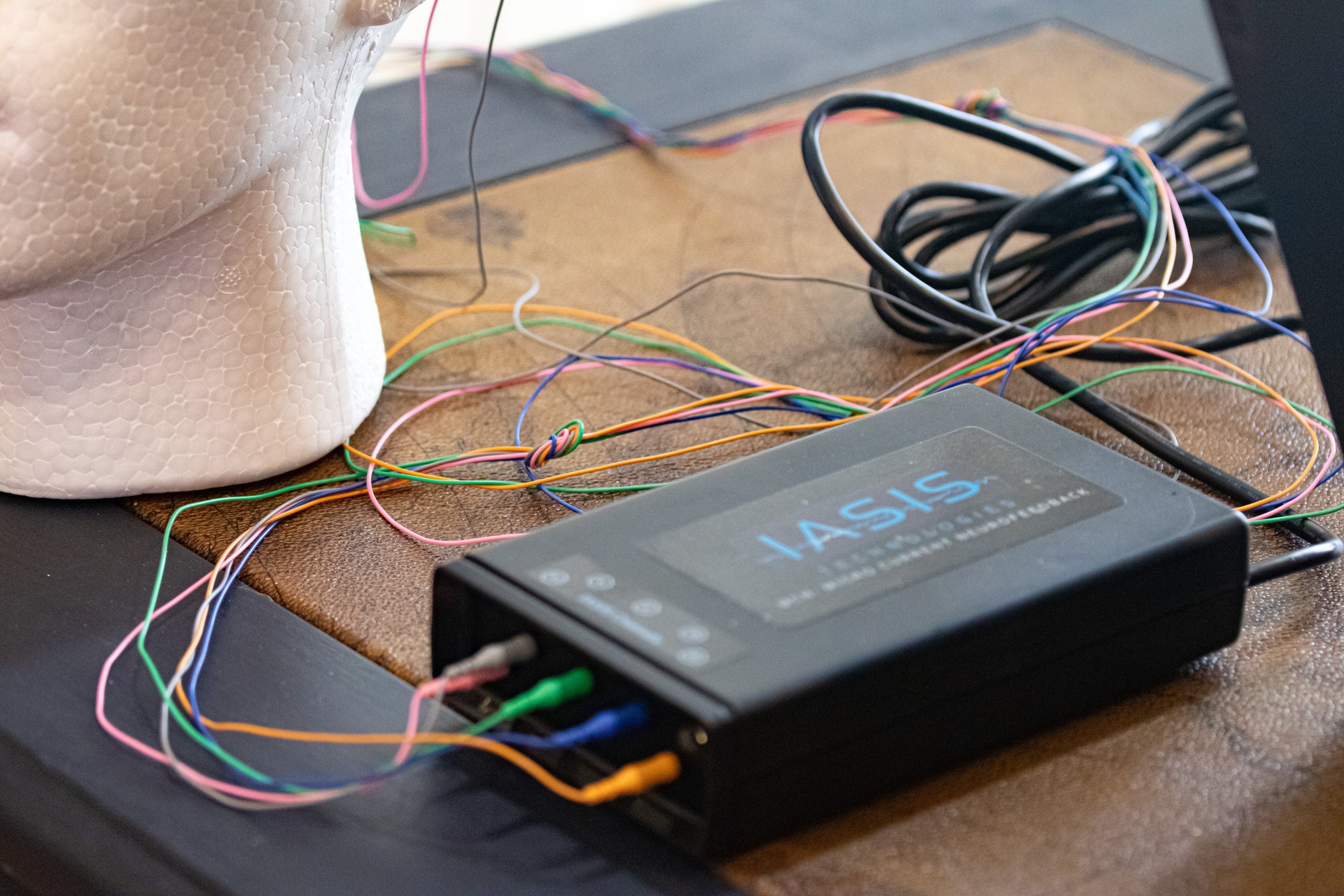
MCN delivers extremely low-level electrical signals that are intended to support the brain’s ability to shift toward more regulated patterns. The approach is designed to be non-invasive and non-painful.
Early Changes Families Commonly Notice
Some families report noticing changes after several sessions, such as fewer meltdowns, calmer transitions, improved sensory tolerance, or better sleep. Individual responses vary, and changes may be gradual.
What the Research Shows So Far
Research on traditional EEG-based neurofeedback has shown potential improvements in attention, emotional regulation, and social functioning in some individuals with ASD.
Research specific to microcurrent neurofeedback is more limited and still emerging. While early findings and clinical observations are promising, larger and more rigorous studies are needed to fully understand its effectiveness.
What Sessions Feel Like for Children
Sessions are typically calm and supportive. Children may have a parent or trusted adult in the room with them.
The microcurrent signals are usually below the level of conscious sensation and are often not felt at all. Accommodations can be made for sensory-sensitive children.
Impact on the Whole Family
Improved regulation in one child may help reduce daily stress, support smoother routines, and create more opportunities for connection among caregivers and siblings.

Supporting regulation can have ripple
effects throughout the family system.
How Microcurrent Neurotherapy Fits With Other Therapies
When used alongside other supports, MCN may help improve engagement in occupational therapy, speech therapy, behavioral supports, and educational interventions. It is generally considered a complementary approach rather than a standalone treatment.
Setting Honest Expectations
MCN is not a cure for autism, but it may be a helpful tool within a broader support plan. Results vary between individuals, and timelines can differ. Consistency and realistic expectations are important.
Next Steps for Families
Interested in learning more about whether microcurrent neurotherapy could be appropriate for your child? Consider booking a low-pressure consultation to explore how it may fit your family’s needs.